Omio
- Technology, Travel
- 31-50 team size
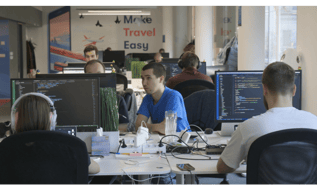
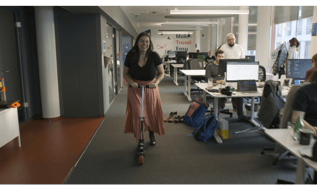
Omio - Making Travel Easy through Technology! Our team of over 400 people comes from over 50 different countries across the world, so we know a thing or two about travelling. We’re working every day to make travelling and exploring the world by train, bus, flight and ferry easy, flexible and stress-free. Omio is constantly changing and evolving and we’re looking for people with solid technical skills, ambitions to challenge status quo, and optimistic view of the future of travel to join our team of developers, product owners, analysts and designers. At Omio your ideas aren’t just welcome—they shape how we work and grow. Our team in Prague builds two major technology platforms for Omio - a system to integrate a global network of travel providers and a B2B platform. These products represent two fundamental pillars of Omio's growth.
What can we do?
Omio can be used anywhere and by everyone to search for, browse and book travel connections. Our ambition to make it possible to find a connection between any two places in the world: we have global air coverage, but our primary domain is ground transportation via trains and buses. We also offer the possibility to book ferries or rent a car.

What is unique about us?
Omio goes a step further than many other travel search engines - we create and offer unique combinations of connections across different travel operators, enabling our users to seamlessly book trips between an unprecedented number of places from a single app.

What technologies do we use?
Our infrastructure is built end-to-end in cloud, at this point primarily Google Cloud. We utilize two primary back-end stacks - Java / Spring Boot and Go. For special purposes in the area of data processing, we use Scala and Python. Our back-end architecture respects the micro-service paradigm. To deploy services to production, we use Docker containers in Kubernetes clusters. Our DB stack is based primarily on Couchbase but there are places where we use MongoDB or MySQL.
Our web front-end utilizes a TypeScript/Node.js stack, our web UIs are built using React.js. We also develop native mobile apps for Android and iOS but we are more and more pushing forward with cross-platform approach to building user-facing functionality with the help of React and React Native.
We foster a culture of internal open-source development and motive our engineers to look for ways how to help each other and find creative ways of reducing blocking dependencies between teams.
More information can be found in our engineering blog: https://medium.com/omio-engineering

How are we organised and how do we plan?
Our product development department is made of several tribes. Each tribe consists of several teams, internally called "pods". A tribe has a shared missions and owns corresponding product features and technical components. For example: the Coverage Tribe owns and develops a platform to integrate transportation providers into Omio and consists of several pods who take care of different projects in the functional area. Each pod is in fact an agile cross-functional team of engineers, a designer (if needed) and a product person.
We plan our work using the OKR methodology (Objectives and Key Results) on a quarterly basis. OKRs help us align on goals between different levels of company leadership, between different functions (e.g. marketing, commercial department, product development) and between different tribes.
Everyday routine is organised using agile principles. We use SCRUM or Kanban, depending on what makes more sense for a particular team or project.